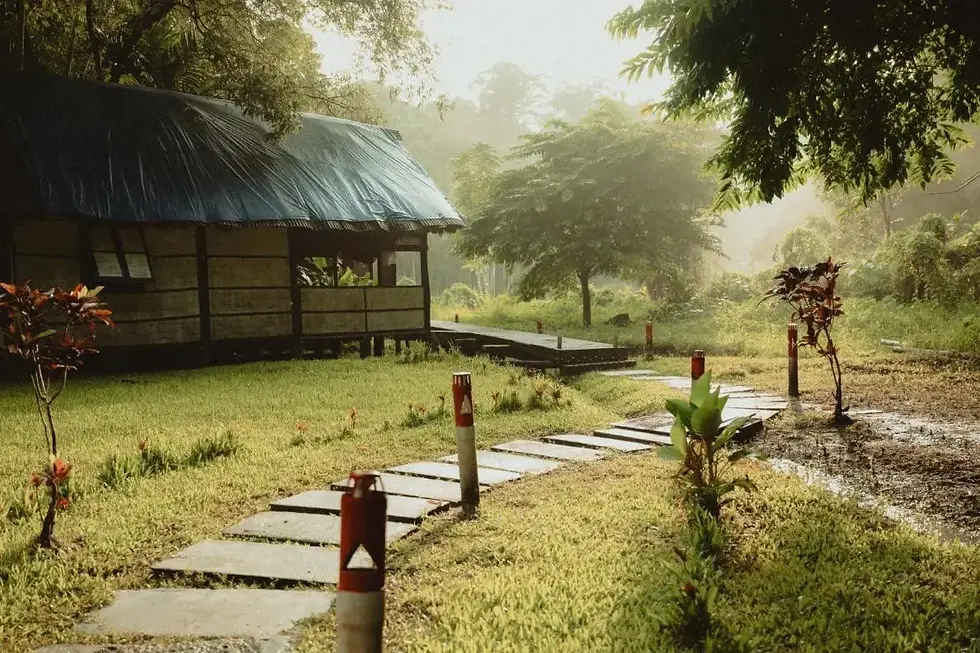
The Secret Life of the Andamans During the Monsoons
For many visitors, the monsoons in the Andamans are simply a season of rain. But for the islands' forests and wildlife, they are a signal that it's time to wake up, grow, sing, bloom, and breed.
The first showers transform the landscape almost overnight. Dry leaf litter disappears beneath carpets of fresh green shoots, ferns unfurl delicate new fronds, and mosses begin creeping across tree trunks and fallen logs. The forest seems greener, louder, and more alive with each passing day.
Flowers That Wait for the Rain
Many tropical plants time their growth and flowering with the monsoon. Wild gingers push up fresh leaves from the forest floor, while climbers and vines take advantage of the abundant moisture to race towards the canopy. Along roadsides and forest edges, splashes of colour appear where only weeks before there was green.
Even familiar trees seem rejuvenated, producing fresh flushes of leaves that attract insects, birds, and other wildlife.
When the Frogs Take the Stage
One of the most dramatic monsoon spectacles begins after sunset. As puddles and streams fill with rainwater, frogs emerge from hiding and begin calling for mates. What might sound like a chaotic chorus is actually a carefully orchestrated breeding season, with each species announcing itself through its own unique call.
For many island frogs, these wet months offer the best chance to reproduce before temporary pools disappear.
Birds on the Move
Birdlife also becomes particularly active during the monsoons. Insects flourish in the damp conditions, creating a feast for insect-eating birds such as drongos, bulbuls, and flycatchers. Mixed-species feeding flocks roam through the forest, turning a quiet morning walk into a rewarding birdwatching experience.
After a shower, it's not uncommon to see birds emerging to feed, preen, and bask in the brief sunshine.
A Season for Small Wonders
The monsoons are also the season of creatures that often go unnoticed. Colourful land crabs emerge from burrows, butterflies gather where minerals wash to the surface, geckos become more active as insect numbers increase, and countless tiny invertebrates play their part in recycling nutrients back into the forest.
For those willing to slow down, every trail and garden corner reveals something fascinating.
The Forest Elephant Way
At Forest Elephant, the monsoons are a reminder that nature doesn't disappear when it rains—it comes alive. The season invites a different kind of travel: one that trades busy itineraries for quiet observation, and sunny postcards for moments of discovery.
Sometimes the most memorable wildlife encounter isn't a rare sighting at all. It's noticing a frog chorus after dark, a freshly unfurled fern beside a path, or the smell of rain drifting through the forest.
The monsoons teach us to look closer. And the Andamans reward those who do.