
SUSTAINABLE TOURISM: WHAT IT REALLY MEANS AND HOW WE CAN ALL MAKE A DIFFERENCE
Discovering a more responsible way to experience the Andaman Islands
The Andaman Islands are the kind of place that makes you stop and appreciate how extraordinary nature really is.
Turquoise water, white sandy beaches, tropical forests, coral reefs, mangroves, birds, butterflies and an incredible diversity of life all exist within this remote island environment.
But beautiful places are also fragile places.
As more people discover Andaman Islands tourism, we have a responsibility to make sure that the very things that bring visitors here are protected for the people, wildlife and communities who call the islands home.
This is where sustainable tourism comes in.
But what does sustainable tourism actually mean?
And more importantly, what can each of us do to make a difference?
SUSTAINABLE TOURISM IS MORE THAN BEING "ECO-FRIENDLY"
The word sustainable is everywhere in the travel industry these days.
We see terms such as eco hotels, eco resorts, green tourism, responsible travel and sustainable holidays.
But genuine sustainable tourism is about much more than putting a recycling bin in a hotel room.
At its heart, sustainable tourism means finding a balance between enjoying a destination today while making sure it remains healthy and beautiful for future generations.
It means considering three things:
THE ENVIRONMENT.
THE LOCAL COMMUNITY.
THE LONG-TERM FUTURE OF THE DESTINATION.
And that means sustainability isn't only the responsibility of hotels and resorts.
Travellers are part of the equation too.
WHY SUSTAINABILITY MATTERS IN THE ANDAMAN ISLANDS

The Andaman Islands are particularly special because of their natural environment.
The islands are surrounded by rich marine ecosystems and covered in tropical forests. Many visitors come specifically to experience these natural surroundings through activities such as snorkelling, diving, bird watching,
forest walks and simply enjoying the beaches.
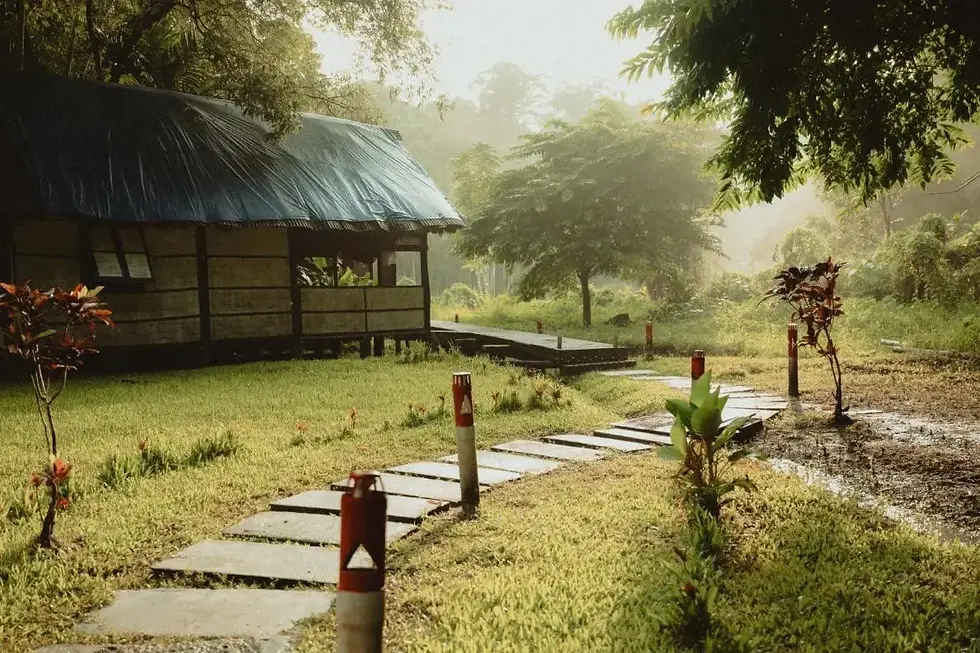
At Forest Elephant Resort, our location in the peaceful village of Kalapathar provides a very different experience from the busier parts of Havelock Island.
The resort is surrounded by lush forest and paddy fields, while the beautiful white sands of Kalapathar Beach are just a short walk away.
This closeness to nature is wonderful—but it also reminds us that we are visitors in an ecosystem that existed long before tourism.
CHOOSE ACCOMMODATION THAT WORKS WITH NATURE

Where you stay can make a difference.
An eco hotel in the Andaman Islands doesn't necessarily have to be luxurious or complicated. Sometimes sustainability is about keeping things simple.
Forest Elephant Resort is designed around a more natural island experience.
Our accommodation embraces the tropical environment rather than trying to shut it out. Fans allow guests to experience the natural warmth and breeze of the island, while the setting among forest and paddy fields provides a genuine connection with nature.
For guests, this means experiencing a little more of the real tropical environment rather than trying to recreate an air-conditioned bubble that could exist anywhere in the world.
You may sweat a little.
You may hear the jungle.
You may notice the weather.
And that's part of the experience.
An eco resort should help you experience the destination - not hide you from it.
EVERY PLASTIC BOTTLE MAKES A DIFFERENCE
One of the simplest things travellers can do is reduce single-use plastic.
Bring a reusable water bottle and refill it rather than buying a new plastic bottle every few hours.
Carry a reusable shopping bag.
Say no to unnecessary plastic cutlery and straws.
Small decisions may seem insignificant when made by one person.
But multiply that decision by thousands of visitors every year, and the impact becomes enormous.
Sustainable travel isn't about being perfect.
It's about making better choices whenever we can.
TAKE NOTHING BUT PHOTOGRAPHS

The old saying is particularly relevant in the Andaman Islands.
Leave shells, coral, plants, driftwood and other natural objects where you find them.
A shell on a beach may look like a harmless souvenir, but the beach is an ecosystem. Removing natural materials changes that environment, even if only in small ways.
And coral should never be taken from the sea.
Instead, take photographs.
They're lighter in your suitcase, they last forever, and they don't damage the environment.
THE OCEAN IS NOT A SWIMMING POOL

The marine environment around the Andaman Islands is one of the main reasons people travel here.
If you're snorkelling or diving, remember that coral reefs are living ecosystems.
Don't stand on coral.
Don't touch marine animals.
Don't chase fish for photographs.
Keep your distance from wildlife.
And choose responsible operators who understand the importance of protecting the environment they depend upon.
The best underwater experience is one where you observe rather than interfere.
SLOW DOWN AND STAY LONGER
One of the simplest ways to make travel more sustainable is surprisingly enjoyable:
STAY LONGER.
Instead of rushing through several destinations, consider spending more time in one place.
A longer stay means fewer journeys between destinations and gives you more opportunity to experience the local community, eat locally, explore on foot and discover places beyond the standard tourist itinerary.
This is one of the reasons slow travel in the Andaman Islands is becoming so appealing.
You don't need to see everything.
Sometimes it's enough to know one beach well.
Walk the same path several times.
Watch the sunrise.
Return to the same café.
Learn the name of the person serving your breakfast.
Let the island reveal itself slowly.
SUPPORT LOCAL BUSINESSES
Tourism can be an incredibly important source of income for island communities.
Where possible, spend your money locally.
Eat at local restaurants.
Buy locally produced products.
Use local guides.
Hire local transport.
Choose activities operated by people who live on the islands.
When tourism money stays within the community, it helps create livelihoods and gives local people a reason to value and protect the destination.
Sustainable tourism isn't only about protecting trees and beaches.
IT IS ALSO ABOUT SUPPORTING PEOPLE.
RESPECT THE WILDLIFE
One of the pleasures of staying at a nature resort in Havelock Island is that wildlife can become part of your everyday experience.
You might see birds in the trees, butterflies around the gardens, hermit crabs along the beach or other small creatures going about their lives.
Enjoy watching them.
But remember that we are visitors in their world.
Don't feed wild animals.
Don't try to touch them.
Don't disturb nests or habitats.
And don't expect wildlife to perform for your camera.
Sometimes the most sustainable wildlife encounter is simply standing quietly and watching.
WALK WHEN YOU CAN
Not every experience needs a vehicle.
At Forest Elephant Resort, beautiful Kalapathar Beach is within walking distance of the resort.
Walking gives you another perspective on the island.
You notice flowers.
You hear birds.
You see village life.
You smell the forest after rain.
You notice things that you would simply pass by on a scooter.
And, of course, walking produces no emissions.
Sometimes the journey really is as important as the destination.
WATER IS PRECIOUS ON AN ISLAND
It can be easy to forget how valuable fresh water is when you're surrounded by ocean.
Island environments have limited freshwater resources, so simple habits can make a difference.
Take shorter showers.
Don't leave taps running unnecessarily.
Reuse towels when appropriate.
Report leaking taps or pipes.
Don't waste drinking water.
It may seem like a small contribution, but responsible water use becomes particularly important when multiplied across an entire tourism destination.
DON'T EXPECT THE ISLAND TO BEHAVE LIKE A CITY
Sustainable tourism also means accepting that island life is different.
Things may move more slowly.
Supplies have to travel across the sea.
Weather can affect transport.
Some conveniences may not always be available.
And that's okay.
In fact, it's part of what makes travelling to the Andaman Islands special.
Rather than expecting the island to provide everything exactly as it would in a major city, embrace the opportunity to experience a simpler way of life.
Sometimes less really is more.
THE MOST SUSTAINABLE HOLIDAY IS ONE YOU REMEMBER
Sustainable tourism doesn't mean giving up enjoyment.
Quite the opposite.
It can make a holiday more meaningful.
Instead of buying another souvenir, you might remember the sunset at Kalapathar Beach.
Instead of spending the afternoon indoors, you might take a forest walk.
Instead of scrolling through your phone, you might watch a Brahminy kite circling overhead.
Instead of rushing from one attraction to another, you might sit quietly beneath a tree and listen to the jungle.
These experiences don't cost the Earth anything.
And they may be the ones you remember for years.
SUSTAINABLE TOURISM STARTS WITH ALL OF US
Hotels can reduce energy consumption.
Restaurants can reduce waste.
Resorts can avoid unnecessary plastic.
Tour operators can protect marine life.
Local communities can preserve traditional knowledge and environments.
And travellers can make thoughtful choices.
No single person is going to save an ecosystem by refusing one plastic bottle.
But if thousands of people make small responsible decisions, those choices become powerful.
That is what sustainable tourism is really about.
NOT PERFECTION. PARTICIPATION.
EXPERIENCE THE ANDAMAN ISLANDS AT A SLOWER PACE

Forest Elephant Resort is tucked away in the lush surroundings of Kalapathar Village on Havelock Island, offering guests a quieter alternative to the busier tourist areas.
Here, the forest, paddy fields and nearby beach become part of the experience.
If you're looking for an eco resort in Havelock Island, a nature resort in the Andaman Islands, or simply a place where you can slow down and experience authentic island life, perhaps the best thing you can bring with you is a little curiosity—and a willingness to tread lightly.
Because the goal of sustainable tourism isn't to stop people from discovering beautiful places.
It's to make sure that when future travellers arrive, those places are still beautiful.
TRAVEL GENTLY. EXPLORE THOUGHTFULLY. LEAVE A LIGHTER FOOTPRINT.
And let the Andaman Islands continue to do what they do best:
BREATHE, GROW, AND INSPIRE.


